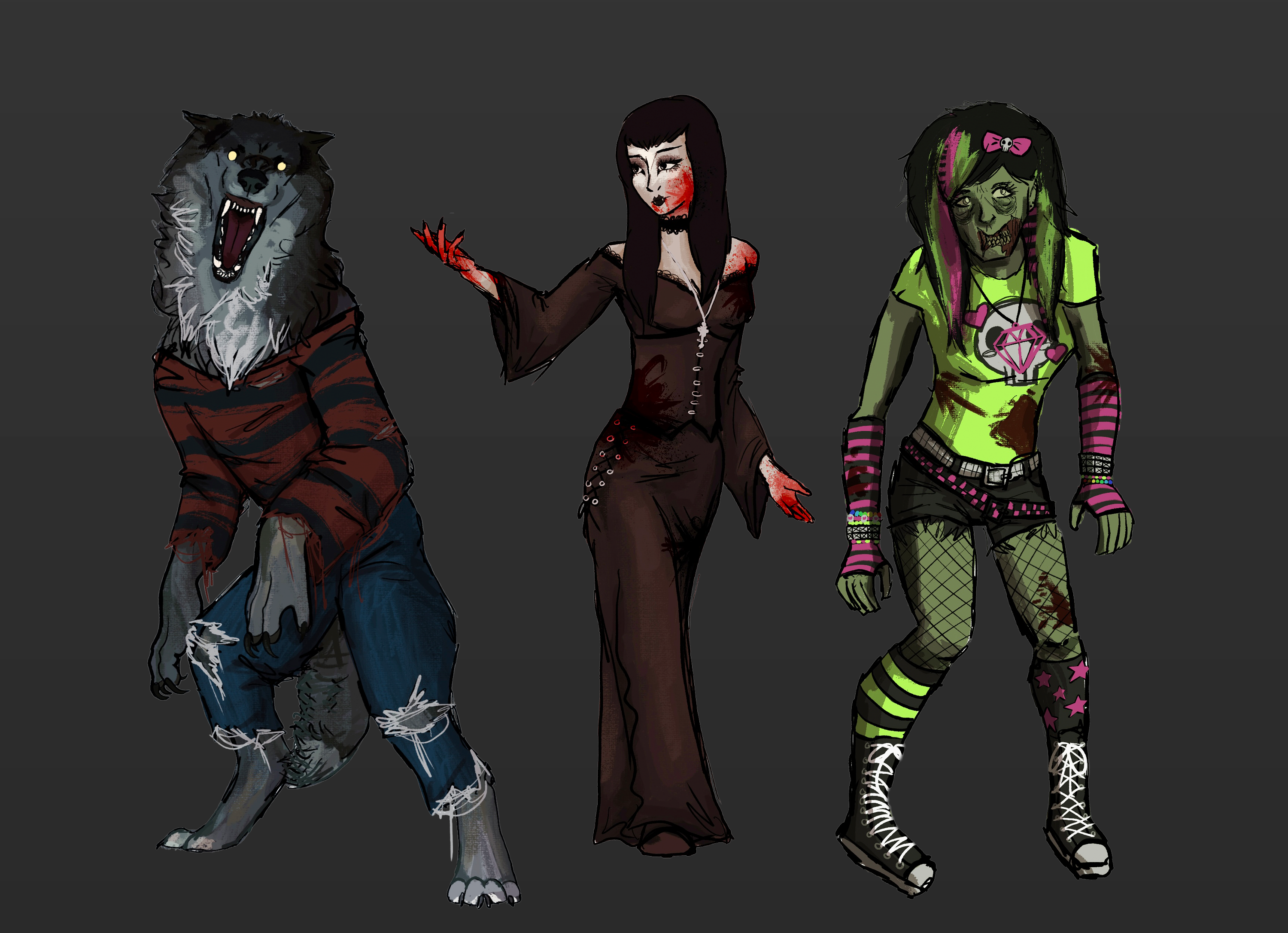
We're all familiar with recent fashion trends such as fairycore/fairy grunge, goblincore, and whimsigoth. This influx of microtrends based in fantasy marks a revival of 80s and 90s alternative fashion, particularly as influenced by goth and grunge subcultures. But what is the connection between these alternative subcultures and fantasy? The short answer is that both represent a desire to step beyond restrictive social norms. By definition, alternative subcultures exist outside of the mainstream, often through an outright rejection of normativity. As a result, alternative fashion is closely tied to self expression and creativity. Similarly, fantasy as a genre is highly imaginative, offering readers and viewers an escape into new and magical worlds. Fantasy often explores the impossible: as the border between real and unreal begins to disintegrate, our innermost desires and fears are able to materialize through realms of dreams and nightmares alike.
This intermingling of fear and excitement is often what draws readers and viewers into the fantastic. This is exemplified by the way we respond to monsters. Monsters are, of course, horrifying—but they are also often deeply complex, even misunderstood. Modern fantasy often plays with the duality of monstrosity, leading to exceptionally moral monsters in popular media. For example, some vampires and werewolves can be misjudged, as seen in Buffy the Vampire Slayer and Twilight. The conflict between good and evil, often framed in fantasy as monstrosity vs. humanity, is a binary opposition dictated by larger structures of normalcy. In this way, the struggle between humanity and monstrosity is, in essence, normativity in opposition to non-normativity. In their inherent defiance of normalcy, monsters reflect fear, embodying broader cultural anxieties. Although there are often overarching characteristics within a type of monster, such as the vampire being known for sucking human blood, each rendition of the common monster is culturally specific. Sheridan Le Fanu’s Carmilla and Bram Stoker’s Dracula are distinct from Murnau’s Nosferatu, and they certainly differ from Joss Whedon’s Angel or Stephenie Meyer’s Edward Cullen. All of these vampires, however, are reflective of a fascination with the monster as representative of the forbidden, deviant, or non-normative.
It is unsurprising, then, that there is a link between monstrosity and alternative subcultures. As fantasy can be characterized by a desire to break free from the restrictions of our world, monstrosity can be considered the method. In our world, people often express this desire creatively through art, music, and fashion. For example, the goth subculture emerged in the late 70s, popularized in the 80s by bands such as The Banshees, Joy Division, Bauhaus, and The Cure. As suggested by its name, the goth subculture is influenced by gothic literature, as well as horror and German Expressionist performance art and film. Traditional goth fashion, or trad goth, is often centered around high-contrast makeup, layered clothing with interesting silhouettes, incorporation of texture through lace, leather, and fishnets, backcombed and often choppy hair, chunky shoes, and silver jewelry that often draws inspiration from religious symbols and the occult. These elements undoubtedly echo popular interpretations of the vampire: dark colors, flowy clothing imitating capes, chalk-white foundation, and late-Victorian elements such as lace detailing.
Similarly, the grunge subculture emerged and became popular in the late 80s and 90s, stemming from the alternative rock scene through bands such as Soundgarden, Nirvana, and Pearl Jam. The ideology of grunge was founded on authenticity and the rejection of materialism; grunge became fashionable as a result of the popularity of the bands above, but it consisted of purposefully mundane everyday clothes. Grunge ‘anti-fashion’ was known for its androgyny, allowing performers of all genders to feel comfortable in relaxed and oversized secondhand clothing such as ripped jeans, flannels, band tees, and combat boots. While goth fashion emulates vampiric wealth through a maximalist and often high-effort aesthetic, the rugged look of the grunge subculture is more closely aligned with the werewolf aesthetic, particularly emulated in modern media, such as Buffy the Vampire Slayer’s friendly werewolf, Oz.
Given the common thread of the rejection of normativity and the status quo, we can begin to understand the relationship between fashion and fantasy as a creative outlet of self-expression. The incorporation of monstrous aesthetics within alternative subcultures has continued and evolved alongside popular media, allowing us to trace the progression and reemergence of these influences across the contemporary world of fashion.